SWM Rules 2026: Wet Waste Readiness for Bulk Waste Generators
Bulk Waste Generators: Your food waste is now a compliance requirement.
India’s Solid Waste Management Rules, 2026 require Bulk Waste Generators to review how wet waste is segregated, processed and documented.
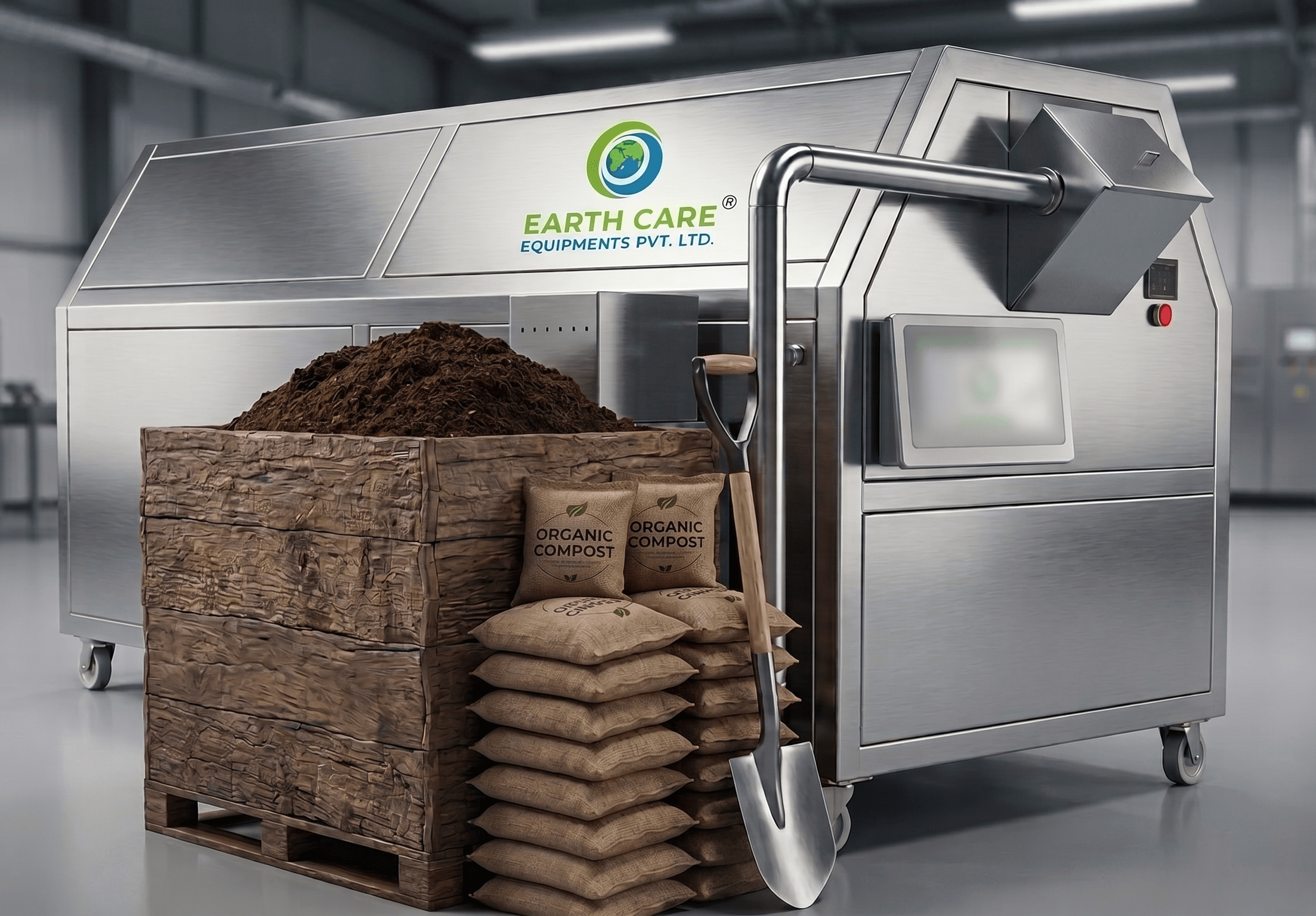
If your site generates daily food waste — hotels, hospitals, institutions, residential complexes, campuses or industries — ECEPL helps you assess readiness and implement practical on-site food waste composting machine and organic waste converter solutions.
Does this apply to your site?
If any of these are true, review your SWM 2026 wet waste readiness now.
Daily Food Waste
Kitchen waste, canteen waste, food preparation waste or wet organic waste generated on-site.
Large Site
Hotel, hospital, campus, residential complex, industry or commercial facility.
No Records
Waste quantity, processing, compost output and service documentation may be required.
Pickup-Only Route
Relying only on wet waste pickup may not be enough without a traceable processing route.
Sites ECEPL supports across India
Hotels & Resorts
Hospitals
Institutions
Residential Complexes
Commercial Campuses
Industries & Canteens
Temples & Banquets
Government / PSU
Four steps to wet waste readiness
Straightforward when the right system, records and support are in place.
Segregate
Separate wet waste at source — kitchen, canteen, food preparation and biodegradable organics.
Process
Use composting, bio-methanation or an approved on-site treatment route where feasible.
Record
Maintain waste quantity, processing route, output and service records.
Verify
Confirm site-specific requirements with the local body or pollution control authority.
Note — Dehydrators Vs. Composting
A dehydrator reduces moisture and volume only. Composting and bio-methanation are biological treatment routes. Do not assume a dehydrator-only setup meets requirements without written confirmation from the relevant authority.
End-to-end support — assessment through after-sales
We assess, recommend, supply, install, train and support. One partner from start to finish.
Assess Waste Volume
Estimate daily food and organic waste to size the right solution.
Recommend Solution
Select the right composting machine or organic waste converter.
Plan Layout
Support space, workflow and installation planning.
Install & Train
Commission the system and train your operating team.
Service & Support
Ongoing servicing, maintenance and documentation support.
Operational benefits beyond compliance
Common questions from facilities and compliance teams
What counts as wet waste?
Food waste, kitchen waste, vegetable and fruit waste, flowers, meat waste and similar biodegradable organic material.
Does every BWG need on-site composting?
SWM Rules 2026 emphasise on-site processing as far as practicable. Confirm the site-specific route with the relevant local body.
Is a dehydrator enough?
A dehydrator reduces weight and volume but is not a biological treatment route. Get written confirmation before relying on it.
How quickly can ECEPL help?
Send your site type, city and daily wet waste estimate. ECEPL can identify the practical next step and suitable options.
Ready to confirm your wet waste readiness?
Send ECEPL your site type, city, estimated wet waste per day and current handling method. We will identify the practical next step.
Official references:
MoEFCC / PIB SWM Rules 2026 announcement |
Official Gazette notification
Disclaimer: This page is for general informational and marketing purposes only and does not constitute legal advice. Organisations should confirm their specific obligations with the relevant local body, pollution control authority or a qualified compliance adviser. Final wording should be reviewed by management before publication.